Bay Area Rifle Championship 2023

With many clubs mainly focused on USPSA or IDPA, rifle-focused action shooting is few and far between in the Bay Area (shit, in most of California), and BARC was a great opportunity to run my “home defense” gun at match pace. This, along with the fact that BARC is an annual event, really made the whole thing feel special even though there wasn’t anything truly at stake for me; I was just there to shoot fast and have fun.

The Bay Area Rifle Championship, or BARC as it is affectionately known, is a rifles-only shooting match held annually at the Richmond Rod & Gun Club (RRGC). 2023 would be it’s 18th year running, with the inaugurual BARC being held in 2006. I’d heard about the match previously, before I started my competitive shooting journey, as some of my friends had participated in prior years (and walked away with some awards, too!). When I saw that the registration for this year’s event had opened up on Practiscore, I paid the $100 match fee and signed up as soon as I could – I consider myself pretty decently-skilled with an AR-15, and thought the match would be super fun to shoot. I spent the next few months eagerly awaiting match day to arrive.

Starting about two-and-a-half weeks before BARC, Match Director Joe Austria began to trickle out the necessary logistical info for match day. While he did post occasional small updates to the BARC Instagram and Facebook, I started getting Practiscore emails with starting bay assignments, estimated stage/round counts, and tentative timing for the event. These general details got narrowed down the closer we got to match day, and I felt well-informed and prepared when I stepped onto the range the morning of. The stage diagrams were posted a few days before the event – something I’m not used to happening at my club matches – so I was able to do some pre-match visualization and get some stage planning in. This was about the only preparation I did for BARC – I didn’t do any dryfire prior to the match.


BARC Begins

I arrived at RRGC the morning of 30JULY with 15-20 minutes to spare. Check-in was a breeze; it took me all of three minutes to drop by the registration table, give them my name, and receive a BARC 2023 t-shirt. I also left a box of WGW goodies for the prize table at the end of the day. I checked out/walked through whatever stages I could on my way to Bay 3, which is the “meeting area” by the stat shack; as it turned out, things were running a little behind so I walked a couple more stages and had a few minutes to relax. The shooter’s meeting came shortly after; sponsors, and RO’s were announced and thanked, last minute changes were noted, and we were off! There were (7) 13-person squads for the main match, and it was awesome to see so many people participating.

I made my way to Bay 1 where my squad was starting; I was a little nervous at first as I was moved onto the match’s “Super Squad” a couple weeks prior, but that quickly faded away as I saw how friendly and helpful these dudes were. There were very talented shooters in our group and it helped to move things along quickly.


Mover? I Barely Even Knew Her!


(Note: if you’re looking for a more in-depth stage/match breakdown, you can find it HERE)

This year’s BARC consisted of (7) main stages and (1) bonus “fun” stage, all shot under USSL/URL Time-Plus rules. For those unfamiliar, URL scoring calls for (1) A-zone hit or any (2) on paper, within the scoring areas. In other words: speed was slightly favored, while accuracy was still rewarded. Even with the generous scoring zones on the paper targets, Joe (who, on top of being the MD, designed all of the BARC stages) didn’t make things easy.
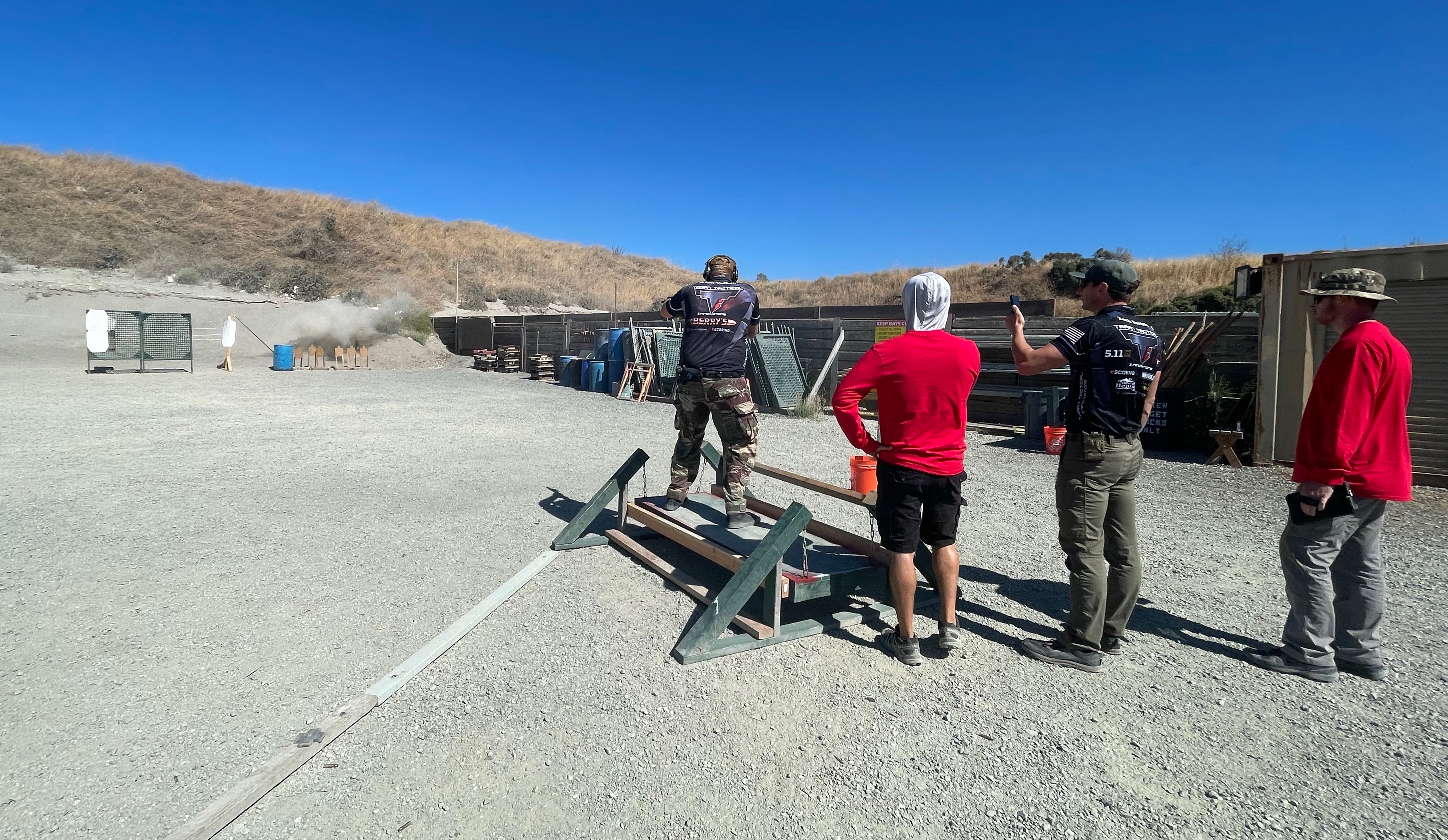

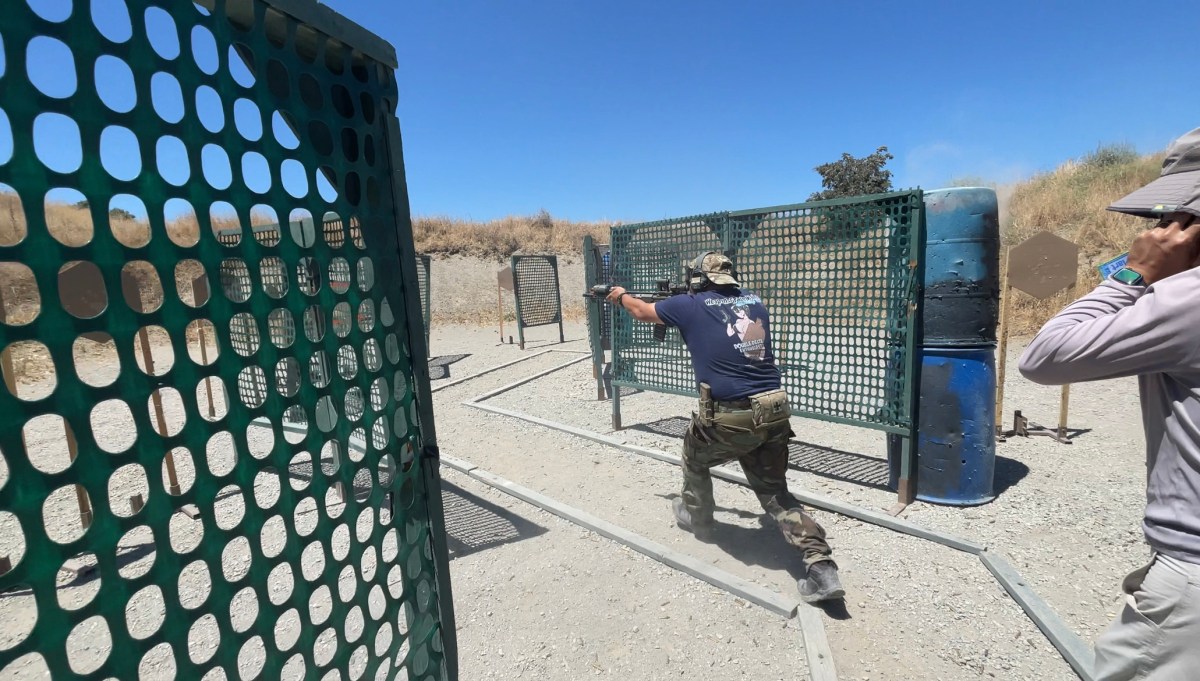
One of the things I knew going into BARC was the liberal usage of stage props. This year, the competitors had to manage a a few different ones. These props induced both downrange target movement and shooter instability (if not managed correctly).


On Bay 3, we went straight from shooting off of a required barricade to engaging a lateral moving target, something I’ve personally never had to deal with before. The last array if targets on 3 was shot from what I like to call The Wobbler, a small platform suspended by chains that does exactly as described when shooters stepped onto it. Bay 5 had both a double swinger and a Maxtrap array, the latter of which was thankfully optional to activate; that didn’t necessarily translate to an easier shot, which leads me to the next thing I appreciated about Joe’s stage designs.
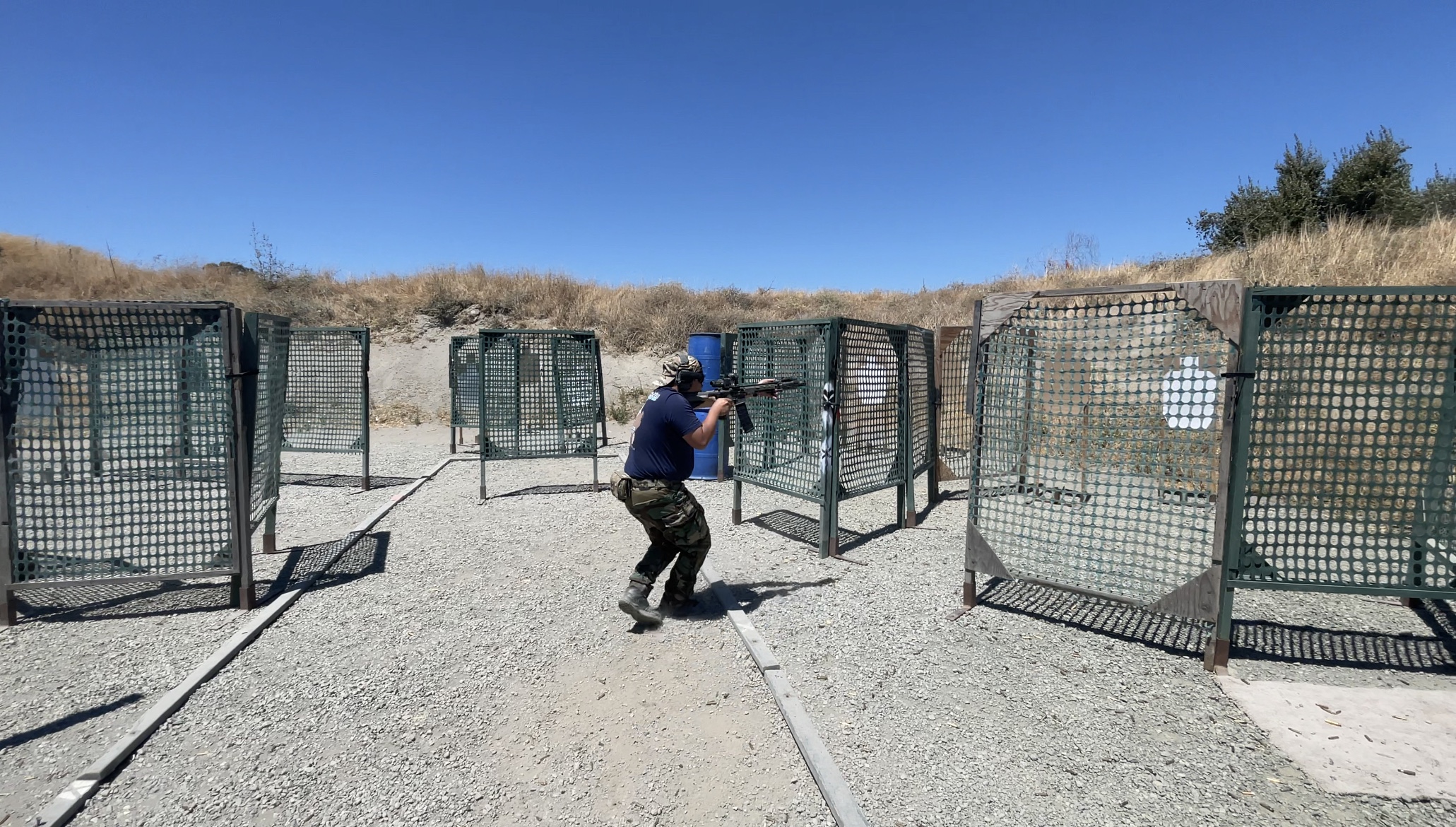

Everybody loves a good hoser stage with a bunch of open targets, of which there were a couple fun ones at BARC. But nobody wants to shoot an easy match, and UML scoring is arguably much easier than the traditional USPSA Hit Factor style… so of course, make the targets harder. Nevermind the fact that shooters had to deal with kooky stage props: reduced targetry was just another challenge we had to face. Of the (7) main stages, (4) had partial or reduced targets – clay pigeons, mini-metrics, no-shoot hostage shots and 8-10in. steel on the 200yd bay. Making tighter shots was just as much of a requirement as shooting and moving aggressively.

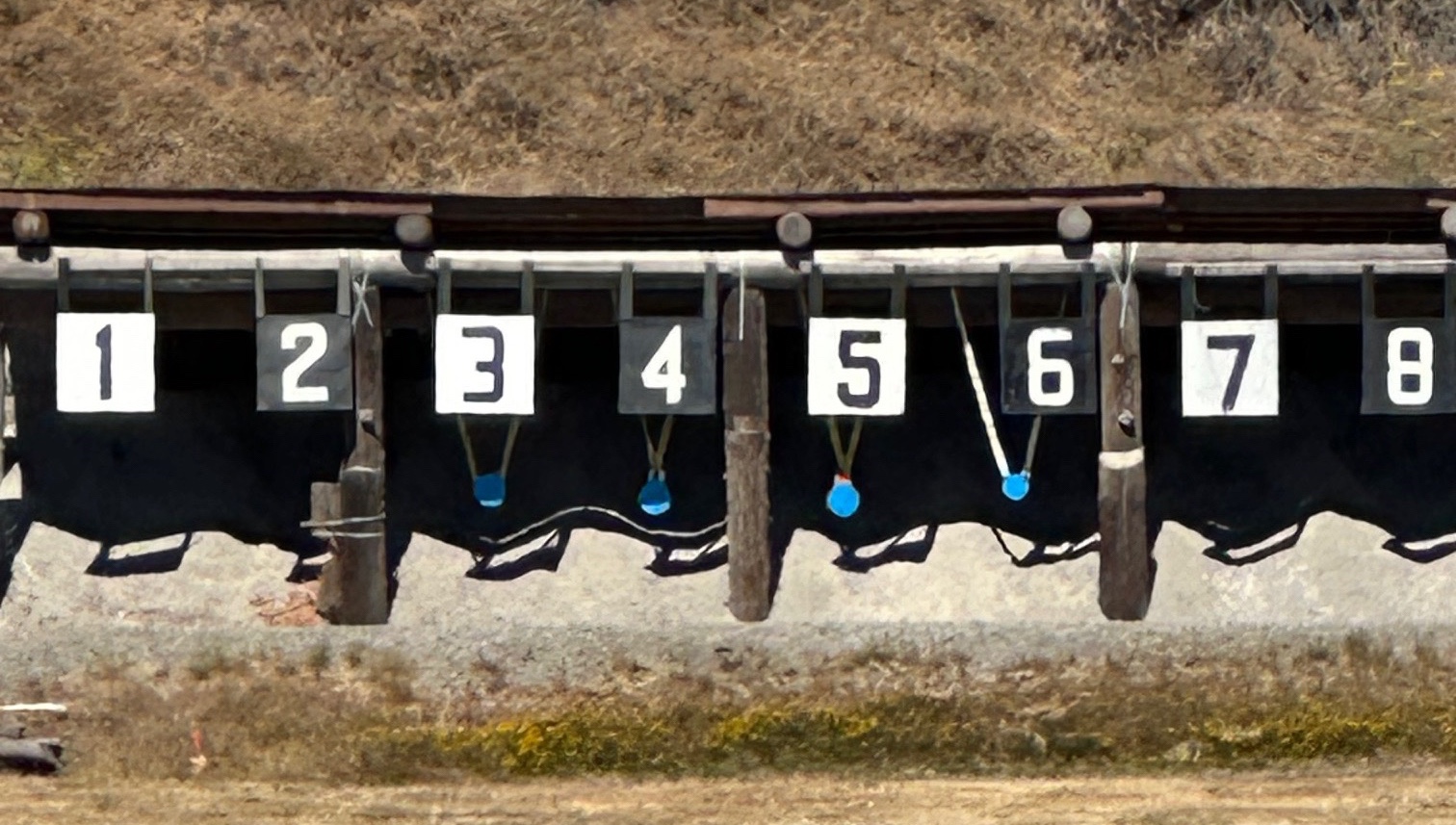
The combination of challenging props, reduced targetry and complex stage design really tested each shooter on how well they understood their rifle and applied their skills. One of the common issues that popped up over the course of the match was mechanical offset; it seemed that many shooters forgot, or simply did not know, to hold their point-of-aim higher on closer shots. This resulted in a fair amount of no-shoots getting clipped. The 200yd. stage was also a good skill and equipment check; bad zeroes, along with what I assume to be a general lack of experience shooting off of barricades and at intermediate distances, resulted in this stage being a “make or break” for many competitors. Some with 1-6x optics struggled to make their hits; others, like Team TTI’s Zack Smith, made short work of the 8 and 10in. plates with an unmagnified red dot. As always, the saying holds true: “It’s not the plane, it’s the pilot.”


“Must Be Present to Win!”
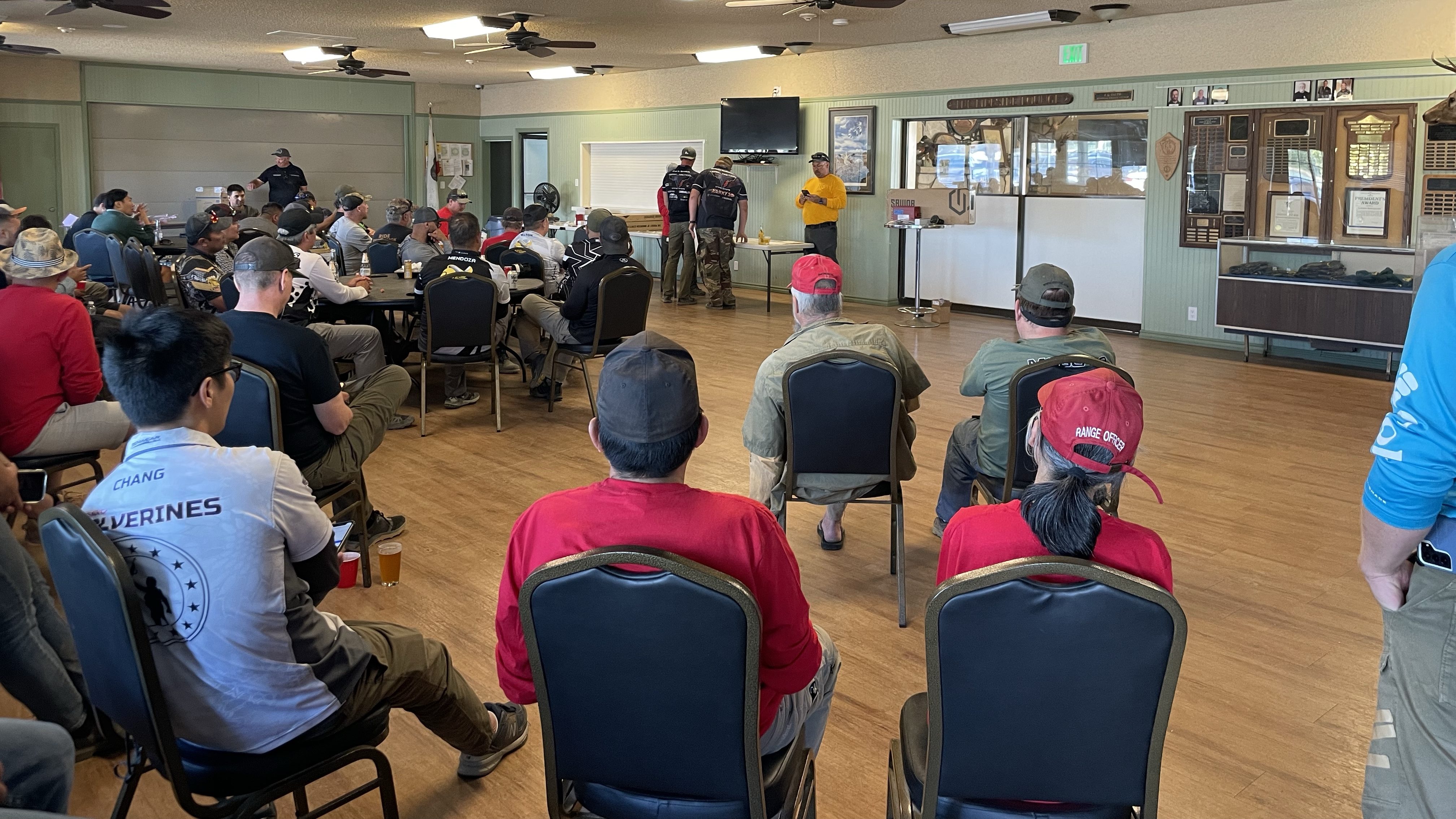
Just as the rules for the random draw stated: you had to be there to get the prize, which, in this case was shooting a super fun match and getting some trigger time in – always a win. With many clubs mainly focused on USPSA or IDPA, rifle-focused action shooting is few and far between in the Bay Area (shit, in most of California), and BARC was a great opportunity to run my “home defense” gun at match pace. This, along with the fact that BARC is an annual event, really made the whole thing feel special even though there wasn’t anything truly at stake for me; I was just there to shoot fast and have fun, but there was definitely a different atmosphere than a typical weekend club match. It’s hard to describe other than “it was awesome.”

Being on the Super Squad, we finished up right around 1500 and had some time to spare after brass call and range breakdown – I was able to down a couple Coronas and a hot dog while we waited for the awards ceremony.

Joe with High OA and 1st Optic winner Zack Smith of Unrivaled Technologies/Team TTI

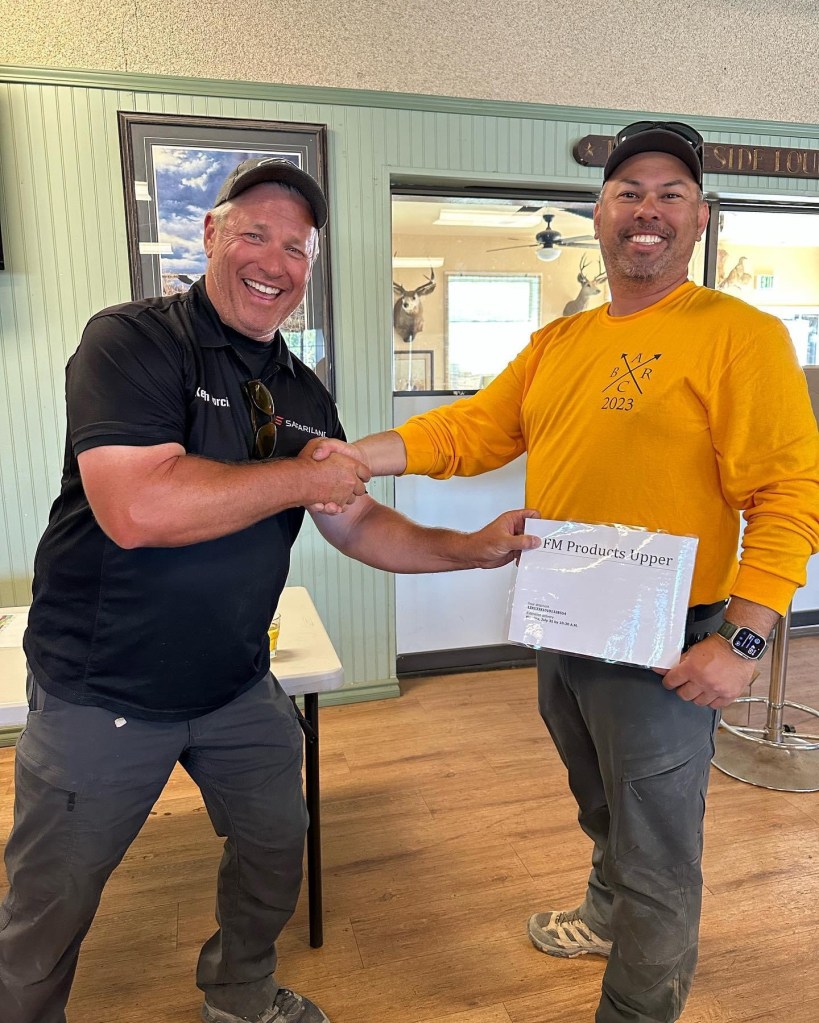
Division and OA winners were announced and awarded, and most competitors got to go home with something from the prize table via random draw- very straightforward closing activities, and everyone was just having a good time and celebrating each others’ successes. On the topic of the prize table I’d like to thank our fellow sponsors for supporting the match and giving everyone cool stuff to come home with! You can find their websites after the images below:
Osha Thai BBQ
FW Arms
FM Products
Taran Tactical Innovations
Aero Precision
X-treme Bullets
Unrivaled Technologies

I don’t know what else there is to say about BARC other than I’ll definitely be back next year. A well-organized event with fun stages, great people, delicious food and the opportunity to win free stuff? Don’t miss out in 2024!


I’d like to give VERY special thank you to Osha Thai BBQ for catering the lunch at the match. All shooters and RO’s were provided with a personal meal on both days, and the consensus was that it was excellent – I agree 100%. The plate we got on Sunday was made up of egg fried rice, chicken, beef and a garden salad along with some special Osha sauce – some of the best Thai food I’ve ever had. If you’re in town please stop by and treat yourself!

Red Oktober 2022 AAR

Disclaimer:
WGW was an official sponsor for Red Oktober 2022. This AAR is only a reflectance from my point of view as a competitor. WGW’s status as a sponsor does not affect Duke’s or my own perception of the competition; conversely, the opinions reflected in my article are Duke’s and my own respectively when noted, not to be taken as word on behalf of the company or its associates.

The Red Oktober Kalashnikov Championship (ROKC) got its start in St. George, Utah back in 2016. Its inception came about at a time where popularity of the AK platform was something not as widely acknowledged in the general gun culture at the time. The rifle/carbine/multigun competition scene here in the States generally swerved away from the AK platform for one reason or another. Thus, Red Oktober was born as a “celebration” of the AK platform. Nowadays, it is widely regarded as one of, if not the most, well-known AK-centric events in the country.

Given the amount of shooters that attended the match, creative measures were in place in order to ensure a smooth event for all competitors. Range staff and Range Safety Officers (RSOs) shot on Thursday and Friday in order to manage the event on Saturday and Sunday, when the other competitors would be split up into “squad blocks” for the weekend.

Duke and I were participants on the competition side of this event. His input in the article will be italicized.

I was registered in the “Light Open” division with my Arsenal SLR106 with an Aimpoint T-2. Light Open dictated any rifle that shot lighter than 7.62(usually 5.45 or 5.56) while being “open” to the kind of attachments and optics the user can run. Because I also opted for the “trooper” category, I was required to wear additional gear such as a helmet, plates, knife, spare magazines and water.

Duke was registered in the “Peashooter” division with his Kalashnikov USA KP9 SBR. The “Peashooter” division entails all pistol caliber carbines. There is no limitation as to what kind of attachments the carbine can have. In his case, his KP9 was equipped with a Sig Romeo 5 and SiCo Omega45K, and shot Freedom Munitions HUSH 9×19 147grn subsonics for the event.


Match Breakdown

Originally there were ten stages total, but two were omitted from final scoring due to weather (Stage 8) and at the discretion of the match director/range masters (Stage 10) respectively on the final day of the event. In the end, the match was scored based on eight stages.

Stage 1 “A Better Gun?”

The stage began with (5) rounds shot from the designated stage gun (a prototype FM Mike-47) into a downrange B8 (Time Bonus awarded but hits are not required). Competitors then dragged a sled (approx. 100-150lbs) to the second position, where they picked up their personal firearm and shot (5) rounds into the second B8 target (hits also not required) before making it into the final shooting area. Here, they were to hit the rest of the targets as they saw them. Steel popper plates only required one hit to be knocked down and neutralized.


Stage 2 “Take Down”

From the crouched seat of the stage Crown Vic, the shooter had to get out of the vehicle, load their rifle, and engage targets as they saw them. The HVT “Rojas” (red steel target) had to be knocked down (not just shot). Steel required three hits to neutralize.


Stage 3 “Desert Tranquility”

From the start position, each shooter had to score two hits on two pieces of steel down range. Upon neutralizing them, the shooter then had to throw a kettlebell to the next firing position and engage the steel targets in the same manner. This was repeated until reaching and firing at the steel from the final shooting position.


Stage 4 “Attack On VTAC”

This stage was comprised of two half-VTAC barricades on the left and right sides of the bay. Shooters could choose to start from either side – they would engage the two steel downrange from one barricade, then engage additional targets (as seen) as they moved to their final position. Shooters ended at this final position by engaging steel.


Stage 5 “Party Like Its 1895”

The stage began from a tank trap, with the shooter holding the stage prop (a simulated Maxim gun). From here, they could either run and “mount” the prop to its stand at the end of the stage before returning to retrieve their rifle, or take the prop with them as they engaged targets. It was required that the prop be mounted before the last shot could be fired to end the stage.


Stage 6 “Raise The Banner”

From a start position of their choosing, the shooter had to engage the steel target on that side with two hits. After neutralizing it, they then had to pick up the “flagpole” and move it to the next position before repeating the same engagement process. The shooter then had to move the flagpole to the final staging point and engage the remaining targets as they saw them.


Stage 7 “Close Quarters”

At the start buzzer, shooters had to fire one round from the stage gun (a snub nose revolver) at the present target. The shooter then had to retrieve their personal weapon and engage the rest of the targets in the stage as they saw them.


Stage 9 “Break Your Money Maker”

From the side of their choosing, the shooter had to engage a steel target with one round in the chamber. Regardless of hit or miss, they had to then carry the prop dummy “Lt. Dan” (approx. 70ish lbs) to the opposite side of the stage. If they missed the first shot, shooters had to re-engage the steel from this position; if they missed again, they had to continue on with the stage.


Bonus Stage

With the stage gun (an IWI Jericho 941), shooters had to engage two targets in the “Mozambique” pattern (2 chest, 1 head) as fast as possible from low ready, with the manual safety engaged.


The Good

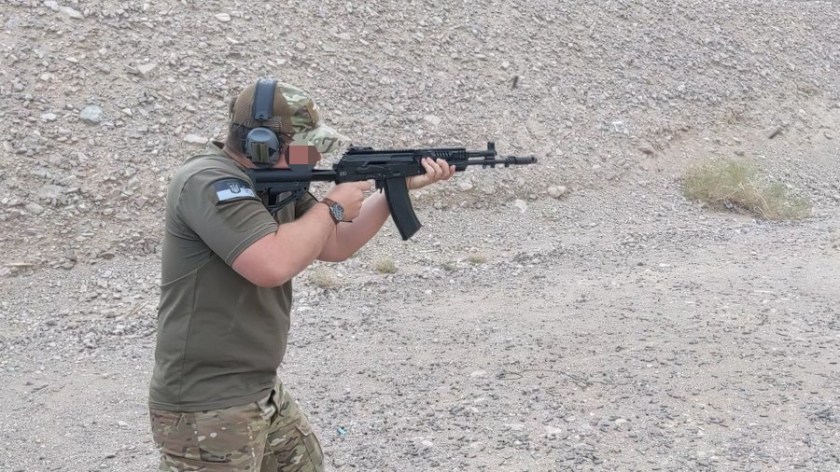
This event, at its core, is most certainly true to its AK/Com-Bloc theme. Competitors were encouraged to use all manner of Com-Bloc or Com-Bloc adjacent weaponry. While it was possible to run the match with any other type of rifle, that score wouldn’t be tallied and officially recorded for standings. That being said, just about every variant or sub-variant of 7.62×39, 5.45, 5.56 and 9mm AK platform were on display. Some of the more eccentric rifles on display included everything from DP-28s to SKSs, which were a joy to see in use.

Stage Design

The stages were varied in layout, skills used, obstacles, and engagement ranges. Scoring was essentially “any two will do” with headshots and armor zones coming into play in some stages. Self-healing Infinity Targets were used as opposed to cardboard, meaning resetting for a new stage was a quick run of spray paint. Each stage also had suitably funny briefings, including engagements against 30-50 wild boars, and defending your honor against a pack of crazed rapists. I enjoyed each stage that I shot, as they all had different levels of pre-planning, and tested a mix of applicable skills and disciplines. Going from “long” distance shots to clearing targets at indoor-distances was a common theme, and kept the runs from being tedious.

Each stage definitely had its charms and challenges, highlighting strengths and weaknesses in our shooting. Learning points in stage planning, vision, and fundamental marksmanship were highlighted.

Open Squadding

Open squadding was the primary method for cycling competitors in and out of stages. The way it worked was that specific groups would shoot a certain set of stages at differing times of the day. For example, Duke and I registered in a “squad block” that shot stages 1-5 Saturday morning and had the rest of the day off to check out vendors and the such. We would then pick up stages 6-10 Sunday afternoon. We had “shooter cards” with our names written on it that we would hang on a line of nylon cord when we reached a stage. This helped ROs determine the shooting order without having to wait on certain people or remember who was in which squad. Upon completion, we would collect our equipment and cards and repeat the process on the next stage of our choosing, which was usually whichever one had the shortest line.

In short, the system did well for such a large attendance-competition(with approximately 300+ competitors). Open squadding and stage blocks made sure that not one stage was overpacked with shooters and kept the flow of the event going, while allowing competitors to see the other parts of the event outside of stages. However, this system also came with its flaws.

The Bad

While the event itself ran smoothly, there were still negative factors. However I must preface that a large amount of these cons were no direct fault of the match directors or range masters themselves, but rather it was a product of the match environment, both literally and figuratively.

Weather

On Day 1, the venue experienced strong winds that persisted throughout the day. By noon, winds reached up to 30 miles per hour with gusts as strong as 50 miles per hour. The overpowering winds moreso had an effect on vendor tents and the stages. Through the night, these winds were strong enough to knock down stage 8. Despite the best efforts of the range staff, the stage was unable to be restored.

Open Squadding

Some cons that came with the nature of open squadding is usually between people cutting in line or delays in queue due to a shooter not being present when their name is called. At worst, this resulted in delays that came close to up to half a. hour just to reinstate someone that showed up late into the shooting order, figuring out reasonable reshoots, or arguments determining who was originally where in the queue. RSOs between stages handled this matter at different levels on a case-by-case basis. Duke and I circumvented this by just moving ourselves to stages with less activity that we haven’t shot yet.

Vendors, Demos, and the rest of the event

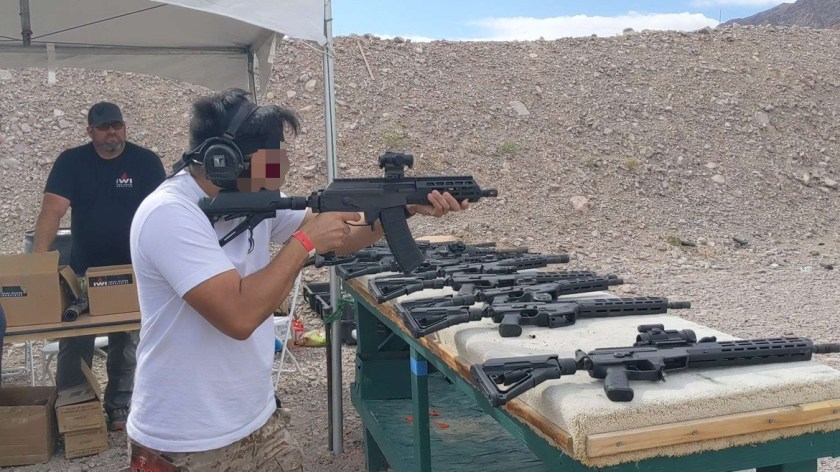
The other half of ROKC is essentially a celebration or small festival centered around the Kalashnikov rifle. There were several vendors present, such as Century Arms, IWI, HuxWrx, Dead Air, BlueForce Gear, and several others. M13 Industries had a host of select-fire gats to unload for a nominal fee, such as the M4, AKM, M1A1 Thompson, M3 Grease Gun, and AK-12. I personally shot the AK-12, which shot as nicely as any 5.45 does, with a bit of extra swag. We can get into it’s inherent flaws some other time, it was still super fun.


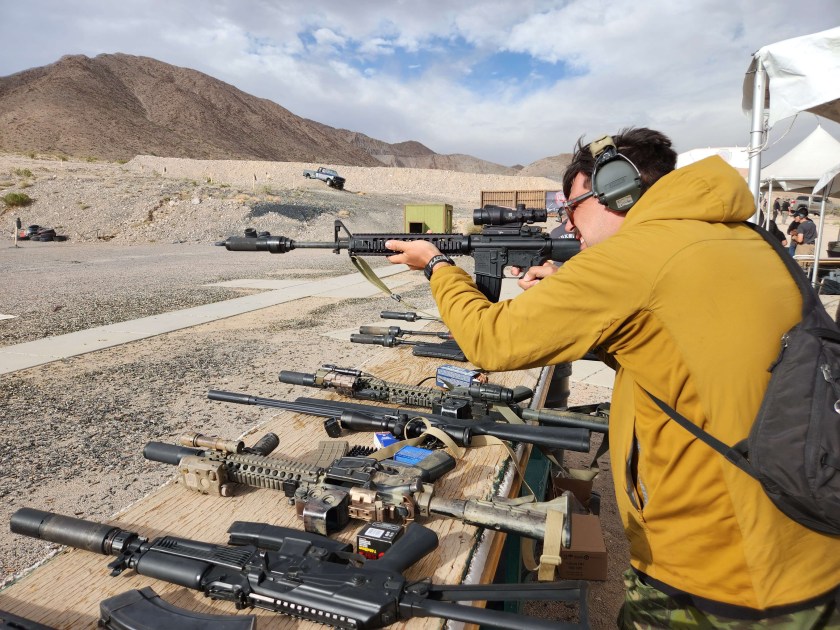
The suppressor manufacturers were offering demos on their products. The guys with HuxWrx and Dead Air were super friendly, and let us rattle off a few rounds with multiple suppressors and platforms. IWI let us shoot some full auto Galil ACEs in various calibers (I went with 5.45) and Century had a POF Mp5K with suppressor that we popped a few through.

Several booths were giving out little swag pieces commemorating the event. I also ended up buying a BlueForce Gear shirt with ROKC theme, and managed to badger the rep into giving me a handful of the famous BFG Lip Balm. I’m pretty sure I saw Beez Combat Systems giving away helmet scrims, but I didn’t manage to nab one. There were also a few food vendors, BBQ and Mexican food, to keep you going through the day.

Conclusion/Special Thanks

To wrap this up, Red Oktober was definitely an event that we enjoyed. No matter if you were a competitor or spectator (who had free admission to the event), there was always something to do.

If you are thinking of applying to shoot the competition side of this event, I would highly recommend it if possible. Admission to compete is steep compared to a local club match, but given the size of the event its not surprising. From what I noticed, what prevents a sizeable amount of interested competitors is the possibly intimidating match atmosphere. Between Duke and myself, we did not sense that at all during our time there. Instead, a majority of people we shot with had a welcoming attitude and the RSOs were clear in communication. Overall, it is a fun match to participate in at least once, and maybe the catalyst for some to compete on their free time afterwards.

Special thanks to Rifle Dynamics and Pro Gun Vegas for running such a large event, despite the factors that were within and out of their control. Both of us are most definitely looking forward to the next year.

Of course, this goes without saying, but special thanks to the Weapons Grade Waifus family for instigating this trip idea in the first place. Events like these may be fun, but are that much more memorable with a group of friends.