Average C class shooter with sub-average IQ. Spend as much time and money on shooting and competitions as I do playing gacha games. Terrified of half IPSCs and partial targets.
USPSA Member: A139981
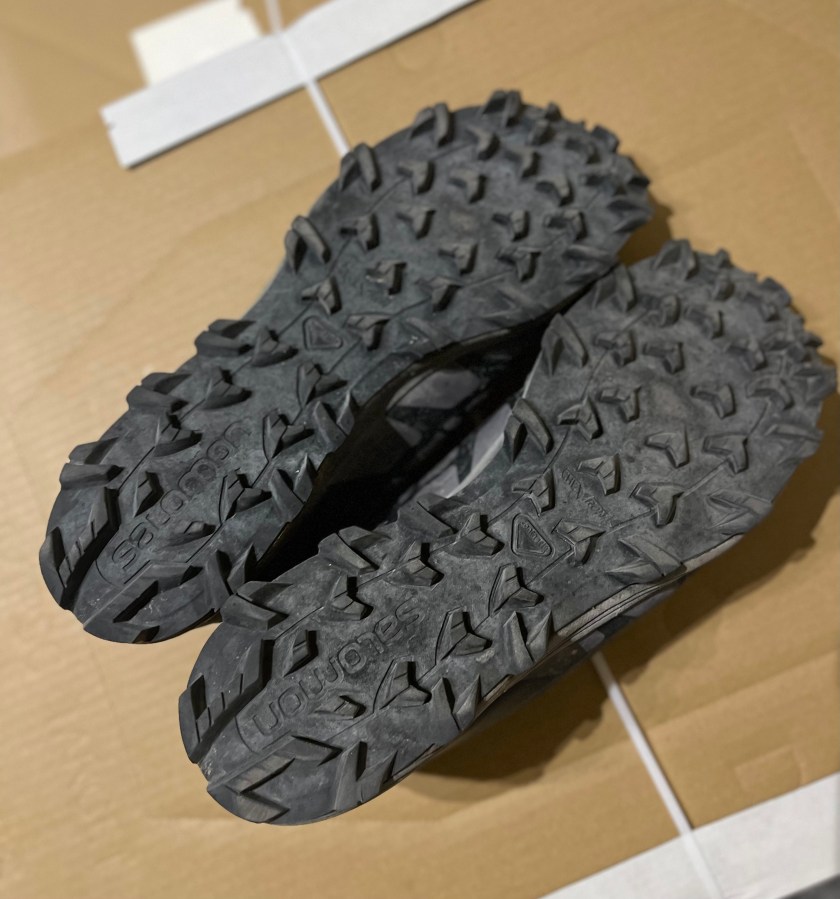
Footwear is usually something people don’t talk about when it comes to shooting. Generally speaking, a comfortable pair of sneakers can absolutely get the job done; I even used to run classes and matches in a pair of Chucks, which was a very bold move depending on the ground surface of the range I was at. Most of the outdoor ones had dirt, gravel, or some combination of the two. Thus, after slipping and sliding my way through Area 4, I figured it was probably time to get dedicated “range shoes”.
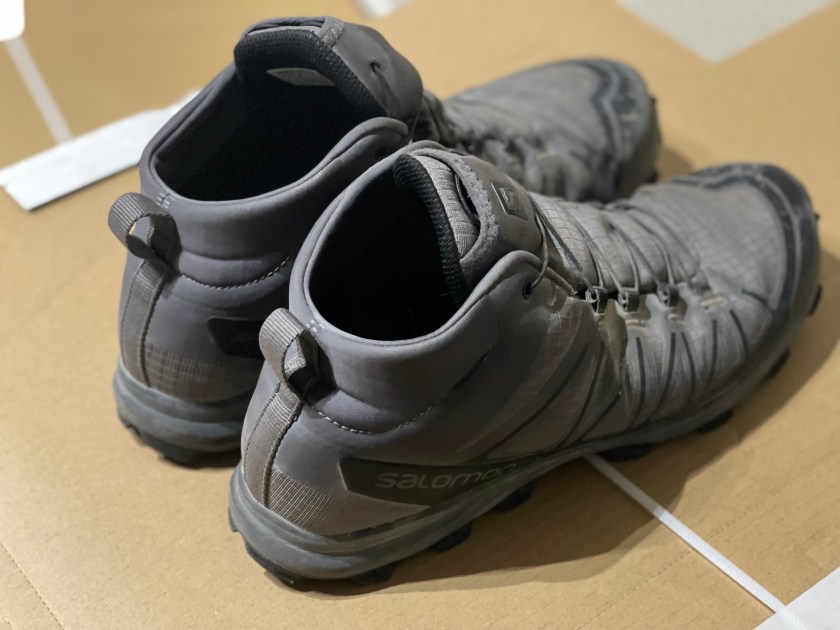
I took note of what everyone else was wearing: Altama, On, Salomons, Merrells. Trail running shoes are the norm in my locale. After asking some friends for their input, and a couple who were actually willing to let me test out a pair of their shoes, I finally settled on the Salomon SpeedAssault 2s.
Features
There are a few features of the SpeedAssault 2s I wanted to highlight very quickly. I did not own the previous generation of SpeedAssaults so I can’t speak for any changes between the two. Rather, I am only speaking on the few that I noticed from this pair.
The tread is very grippy on soft dirt and gravel surfaces. While I am not necessarily the quickest shooter, the tread did give me enough confidence to being able to move and explode from position to position. I have not had an instance where I felt like I was gonna slip or fall as I was decelerating.
For laces, Salomon used their Quicklace system. This was the biggest draw to me over other trail shoes that have the traditional shoe lace system – as a match goes on, regular laces can be undone, and retying them to ensure security can get troublesome. The Quicklace allows for hassle-free adjustments on the fly.
Finally, the stretch heel just makes putting on and taking off the shoe so much easier. It doesn’t feel like I need to sit down or brace myself to wear these. After a long day, the last thing you want to worry about is falling and tripping over yourself off the range.
Fit and Finish
The SpeedAssault family of shoes are the military counterpart of Salomon’s SpeedCrosses, which have become a mainstay amongst trail shoes. The shoe’s design is a lot more muted, absent of the large “SpeedCross” branding and contrasting colors normally seen. Instead, it comes in three colorways: Black, Dark Brown, and Wolf Gray. I decided to purchase the Wolf Gray one because it not only looks very good clean or dirty, but also because within a friend group of five, four of us have dark brown SpeedAssault 2s. It helps during parties and gatherings when everyone is trying to figure out whose shoes are whose.
The fit was probably the biggest concern I had personally. Salomons are known to run on the smaller side. As a wide-flat footed American, that type of fit is the bane of my existence. Breaking them in was irritating to say the least. Depending on what socks are worn, it can affect how differently the midfoot feels. My Nike DriFit socks were much more generous versus my Darn Toughs at the beginning. The stretch heel does dig at the back of my heel at times. I have not gotten blisters, but the hotspots were hard to ignore.
The break-in period overall took approximately 4-5 weeks of constant everyday wear. After that point, the gripes I mentioned above quitely disappeared and the shoes became a mainstay with how quick, comfortable, and convenient they are.
Long-Term Review
I would like to write a follow up article to this after a few months, following the rest of my shooting season, to give a true impression. My only experience so far comes from breaking them in, going on a hike, shooting one match, and having a couple of range sessions. Ideally, I would like to give a picture of how these shoes fare in the competitive shooting environment in the long run. While they are reasonably priced in comparison to other mid-high end running shoes, I would like to hope that the durability matches price tag.
See everyone at the range! And stand by for part 2!
Ah, summer: that season where everyone gets to go outside and live their best lives – sweltering heat and bugs aside. This timeframe is also considered an on-season for many USPSA competitors as a lot of Level 2 and Level 3 major matches tend to be scheduled around now. As we start to shoot more during the summer months, these are just a few things I’ve seen some of the local shooters do that can improve your quality of life significantly.
Ah, summer: that season where everyone gets to go outside and live their best lives – sweltering heat and bugs aside. This timeframe is also considered an on-season for many USPSA competitors as a lot of Level 2 and Level 3 major matches tend to be scheduled around now. For those unaware, Level 2 matches tend to be a club’s bigger match (>6 stages, sometimes multi-day events), while Level 3s can be summarized by Area (USPSA interstate groups) matches and Nationals.
Most recently, I had the opportunity to shoot the Area 4 Championship match at Mission 160, my home range. Shooters have the option to opt to shoot all of the stages in one day, or split it up over two according to their preference. Regardless, everyone was sweltering as the Texas summer had begun. This weather entailed little to no cloud cover along with strong mid-90s heat (35C for our overseas readers) on average.
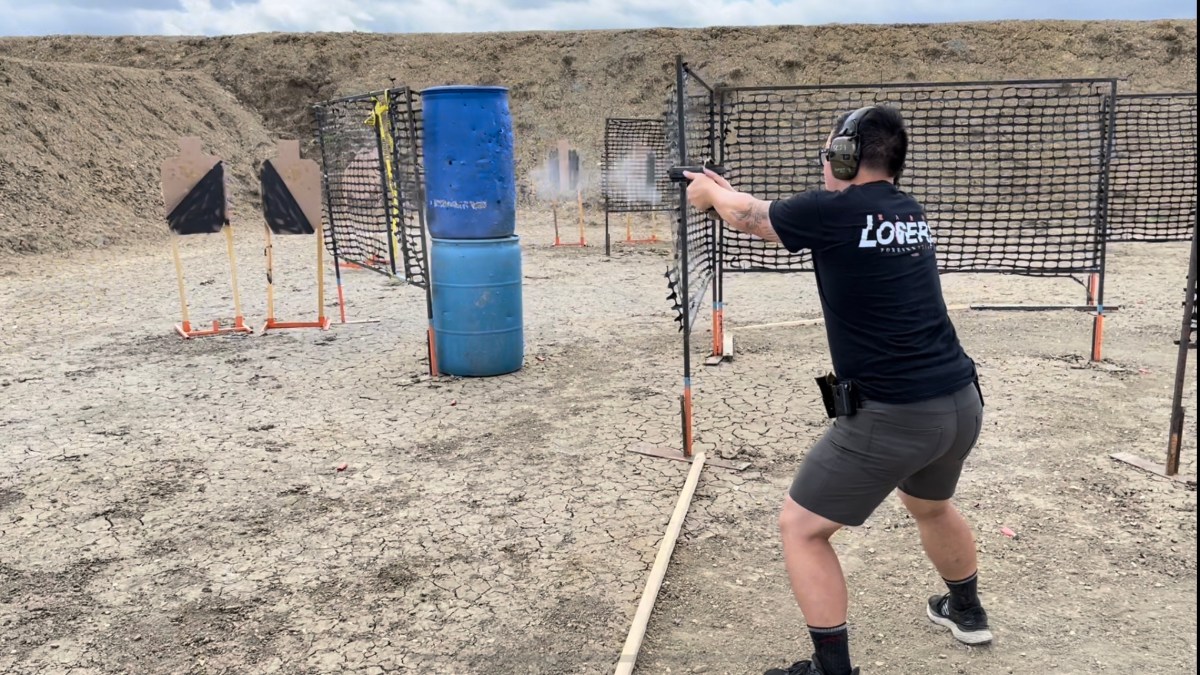
Pictured: Average Area 4 competitor moving on to their next stage (2023, Colorized)
An incident occurred on my second day of shooting where the ambulance had to be called, as one of the competitors suffered from heat exhaustion. Contingencies were in place and they were moved to the range’s air-conditioned building, where the competitor was cooled down and made to drink water. As we start to shoot more during the summer months, these are just a few things I’ve seen some of the local shooters do that can improve your quality of life significantly.
Hydration for the homies
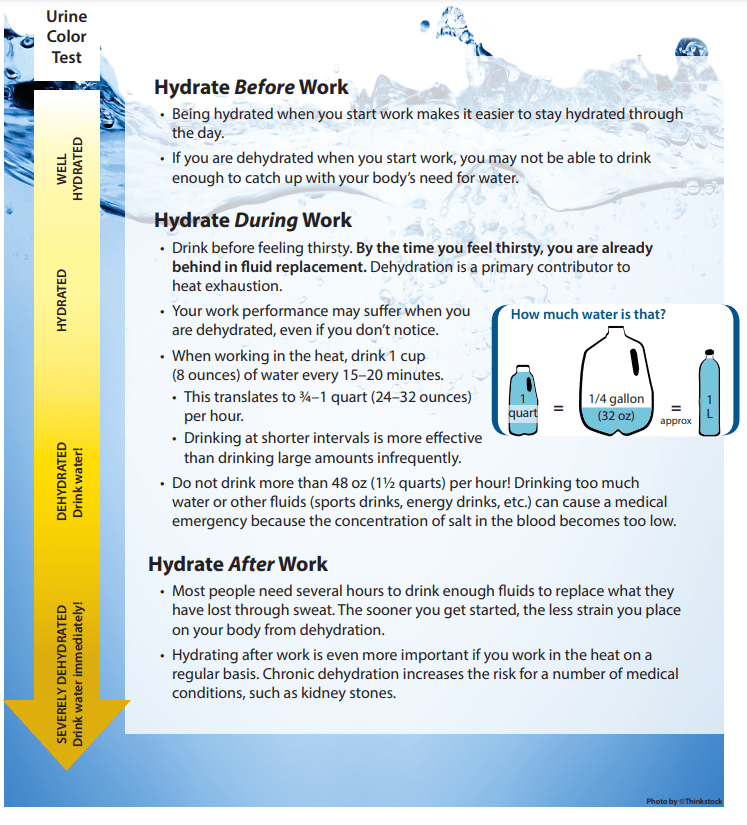
Staying hydrated is usually the initial thought of many when it comes to the summer heat. The CDC recommends about 1 quart (1 liter approximately) of water per hour in the heat. Personally, I end up just packing a whole gallon jug and top off my water bottle as the day goes on. It is much better to have too much water than not having enough.
Source: Center for Disease Control
However, if you know match day(s) will be very hot, it is required that you drink water the day before is starts, as well. I have learned this lesson the hard way many times, where I didn’t drink enough water and ended up taking in some sort of caffeine early in the morning only to find myself developing migraines that were only exacerbated by the heat.
Electrolyte drinks/mixes and similar products (i.e. Liquid IVs) are also a good addition to have on the day of as well. Despite stages being “short” in terms of time spent, you are still shooting and moving in an athletic manner where you are outputting a lot of energy. That, along with taping and resetting stages all day under the sun, means you will be sweating a lot, losing both water and the salt that would allow your body to retain said water.
Finally, as a personal rule, I would stop consuming caffeine at hammer down. Caffeine is known to dehydrate you, and I have come to learn I am very susceptible to this. In the event that you find yourself overcaffeinated, stop consuming immediately and start consuming water. It might take a stage or two to get your nerves back, and you might pick up a migraine, but its better than having it with you the entire day.
Staying Cool includes Feeling Cool
This never really occurred to me until Area 4, where after the heat casualty incident, the range officers (ROs) and match staff were going around making sure everyone had water and were not on the verge of passing out. The ROs, being shooters themselves, had canopies and portable jobsite fans that kept them cool and were gracious enough to let us use thrm as well.
When I sat down on my ammo can, I could feel the air start to bake my skin. Subsequently, I also took note of my sweat and how heavy my breathing was getting, which are generally signs of not having a good time. I immediately looked for a portable fan to stand in front off while fanning myself and downing another bottle of water. Unfortunately, I didn’t have a towel or equivalent to help cool me off.
While keeping up water intake is good, keeping your skin cool is also something that is commonly overlooked. Usually, most people (myself included) would just apply sunscreen and call it good. However, the skin is an organ itself and anything adverse happening to it is something that cannot be ignored. It takes a bit for some people to start sweating and allow their bodies to cool off. If that is not possible, due to humidity/weather or otherwise, I’d recommend having pre-soaked cooling/ice towels stashed somewhere accessible. They’re generally more budget friendly and packable than a portable fan. Amazon has a pack of four for about 12 dollars, but you can pick them up from almost any sporting goods or department store. These are also good to have in the event of heat related emergencies.
Beat the heat!
Hopefully, the tips I have shared will keep you cool in this year’s upcoming season. If you have any tips for staying cool, please feel free to leave them down in the comments below. I am sure I have glanced over a few helpful tidbits, and Texas heat is most certainly different than heat in other parts of the globe. Good luck especially to those of you shooting Level 2 majors, area matches, or even Nationals. Stay cool, make ready!
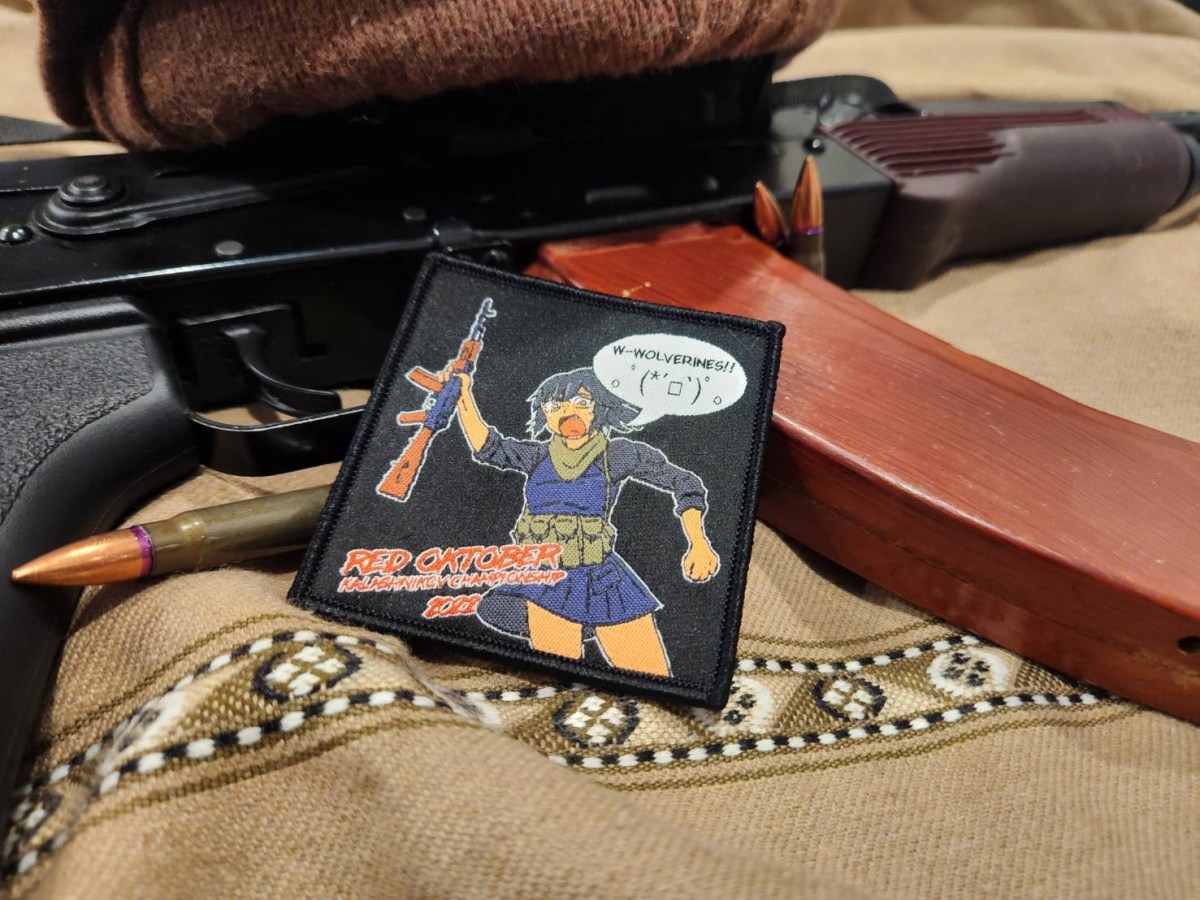
Disclaimer: WGW was an official sponsor for Red Oktober 2022. This AAR is only a reflectance from my point of view as a competitor. WGW’s status as a sponsor does not affect Duke’s or my own perception of the competition; conversely, the opinions reflected in my article are Duke’s and my own respectively when noted, not to be taken as word on behalf of the company or its associates.
The Red Oktober Kalashnikov Championship (ROKC) got its start in St. George, Utah back in 2016. Its inception came about at a time where popularity of the AK platform was something not as widely acknowledged in the general gun culture at the time. The rifle/carbine/multigun competition scene here in the States generally swerved away from the AK platform for one reason or another. Thus, Red Oktober was born as a “celebration” of the AK platform. Nowadays, it is widely regarded as one of, if not the most, well-known AK-centric events in the country.
Given the amount of shooters that attended the match, creative measures were in place in order to ensure a smooth event for all competitors. Range staff and Range Safety Officers (RSOs) shot on Thursday and Friday in order to manage the event on Saturday and Sunday, when the other competitors would be split up into “squad blocks” for the weekend.
Duke and I were participants on the competition side of this event. His input in the article will be italicized.
WGW’s Team ShanghaiNoon. Duke on the left, Chau on the right
I was registered in the “Light Open” division with my Arsenal SLR106 with an Aimpoint T-2. Light Open dictated any rifle that shot lighter than 7.62(usually 5.45 or 5.56) while being “open” to the kind of attachments and optics the user can run. Because I also opted for the “trooper” category, I was required to wear additional gear such as a helmet, plates, knife, spare magazines and water.
Duke was registered in the “Peashooter” division with his Kalashnikov USA KP9 SBR. The “Peashooter” division entails all pistol caliber carbines. There is no limitation as to what kind of attachments the carbine can have. In his case, his KP9 was equipped with a Sig Romeo 5 and SiCo Omega45K, and shot Freedom Munitions HUSH 9×19 147grn subsonics for the event.
Match Breakdown
Originally there were ten stages total, but two were omitted from final scoring due to weather (Stage 8) and at the discretion of the match director/range masters (Stage 10) respectively on the final day of the event. In the end, the match was scored based on eight stages.
Stage 1 “A Better Gun?”
The stage began with (5) rounds shot from the designated stage gun (a prototype FM Mike-47) into a downrange B8 (Time Bonus awarded but hits are not required). Competitors then dragged a sled (approx. 100-150lbs) to the second position, where they picked up their personal firearm and shot (5) rounds into the second B8 target (hits also not required) before making it into the final shooting area. Here, they were to hit the rest of the targets as they saw them. Steel popper plates only required one hit to be knocked down and neutralized.
Stage 2 “Take Down”
From the crouched seat of the stage Crown Vic, the shooter had to get out of the vehicle, load their rifle, and engage targets as they saw them. The HVT “Rojas” (red steel target) had to be knocked down (not just shot). Steel required three hits to neutralize.
Stage 3 “Desert Tranquility”
From the start position, each shooter had to score two hits on two pieces of steel down range. Upon neutralizing them, the shooter then had to throw a kettlebell to the next firing position and engage the steel targets in the same manner. This was repeated until reaching and firing at the steel from the final shooting position.
Stage 4 “Attack On VTAC”
This stage was comprised of two half-VTAC barricades on the left and right sides of the bay. Shooters could choose to start from either side – they would engage the two steel downrange from one barricade, then engage additional targets (as seen) as they moved to their final position. Shooters ended at this final position by engaging steel.
Stage 5 “Party Like Its 1895”
The stage began from a tank trap, with the shooter holding the stage prop (a simulated Maxim gun). From here, they could either run and “mount” the prop to its stand at the end of the stage before returning to retrieve their rifle, or take the prop with them as they engaged targets. It was required that the prop be mounted before the last shot could be fired to end the stage.
Stage 6 “Raise The Banner”
From a start position of their choosing, the shooter had to engage the steel target on that side with two hits. After neutralizing it, they then had to pick up the “flagpole” and move it to the next position before repeating the same engagement process. The shooter then had to move the flagpole to the final staging point and engage the remaining targets as they saw them.
Stage 7 “Close Quarters”
At the start buzzer, shooters had to fire one round from the stage gun (a snub nose revolver) at the present target. The shooter then had to retrieve their personal weapon and engage the rest of the targets in the stage as they saw them.
Stage 9 “Break Your Money Maker”
From the side of their choosing, the shooter had to engage a steel target with one round in the chamber. Regardless of hit or miss, they had to then carry the prop dummy “Lt. Dan” (approx. 70ish lbs) to the opposite side of the stage. If they missed the first shot, shooters had to re-engage the steel from this position; if they missed again, they had to continue on with the stage.
Bonus Stage
With the stage gun (an IWI Jericho 941), shooters had to engage two targets in the “Mozambique” pattern (2 chest, 1 head) as fast as possible from low ready, with the manual safety engaged.
The Good
This event, at its core, is most certainly true to its AK/Com-Bloc theme. Competitors were encouraged to use all manner of Com-Bloc or Com-Bloc adjacent weaponry. While it was possible to run the match with any other type of rifle, that score wouldn’t be tallied and officially recorded for standings. That being said, just about every variant or sub-variant of 7.62×39, 5.45, 5.56 and 9mm AK platform were on display. Some of the more eccentric rifles on display included everything from DP-28s to SKSs, which were a joy to see in use.
Stage Design
The stages were varied in layout, skills used, obstacles, and engagement ranges. Scoring was essentially “any two will do” with headshots and armor zones coming into play in some stages. Self-healing Infinity Targets were used as opposed to cardboard, meaning resetting for a new stage was a quick run of spray paint. Each stage also had suitably funny briefings, including engagements against 30-50 wild boars, and defending your honor against a pack of crazed rapists. I enjoyed each stage that I shot, as they all had different levels of pre-planning, and tested a mix of applicable skills and disciplines. Going from “long” distance shots to clearing targets at indoor-distances was a common theme, and kept the runs from being tedious.
Each stage definitely had its charms and challenges, highlighting strengths and weaknesses in our shooting. Learning points in stage planning, vision, and fundamental marksmanship were highlighted.
Open Squadding
Open squadding was the primary method for cycling competitors in and out of stages. The way it worked was that specific groups would shoot a certain set of stages at differing times of the day. For example, Duke and I registered in a “squad block” that shot stages 1-5 Saturday morning and had the rest of the day off to check out vendors and the such. We would then pick up stages 6-10 Sunday afternoon. We had “shooter cards” with our names written on it that we would hang on a line of nylon cord when we reached a stage. This helped ROs determine the shooting order without having to wait on certain people or remember who was in which squad. Upon completion, we would collect our equipment and cards and repeat the process on the next stage of our choosing, which was usually whichever one had the shortest line.
In short, the system did well for such a large attendance-competition(with approximately 300+ competitors). Open squadding and stage blocks made sure that not one stage was overpacked with shooters and kept the flow of the event going, while allowing competitors to see the other parts of the event outside of stages. However, this system also came with its flaws.
The Bad
While the event itself ran smoothly, there were still negative factors. However I must preface that a large amount of these cons were no direct fault of the match directors or range masters themselves, but rather it was a product of the match environment, both literally and figuratively.
Weather
On Day 1, the venue experienced strong winds that persisted throughout the day. By noon, winds reached up to 30 miles per hour with gusts as strong as 50 miles per hour. The overpowering winds moreso had an effect on vendor tents and the stages. Through the night, these winds were strong enough to knock down stage 8. Despite the best efforts of the range staff, the stage was unable to be restored.
Open Squadding
Some cons that came with the nature of open squadding is usually between people cutting in line or delays in queue due to a shooter not being present when their name is called. At worst, this resulted in delays that came close to up to half a. hour just to reinstate someone that showed up late into the shooting order, figuring out reasonable reshoots, or arguments determining who was originally where in the queue. RSOs between stages handled this matter at different levels on a case-by-case basis. Duke and I circumvented this by just moving ourselves to stages with less activity that we haven’t shot yet.
Vendors, Demos, and the rest of the event
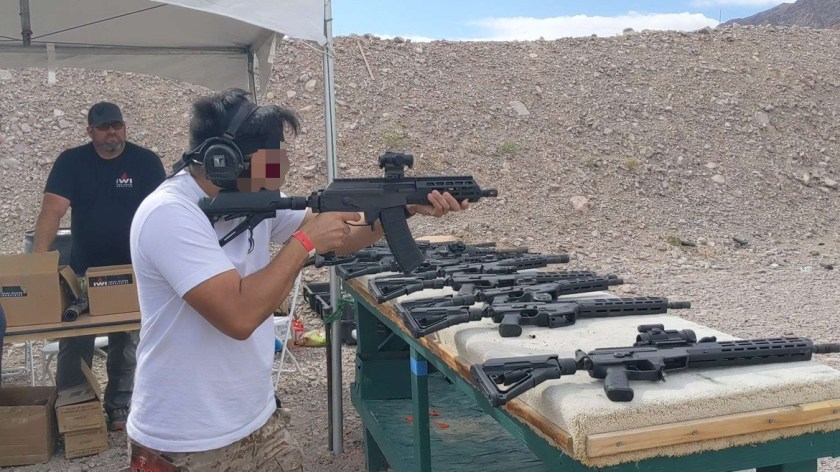
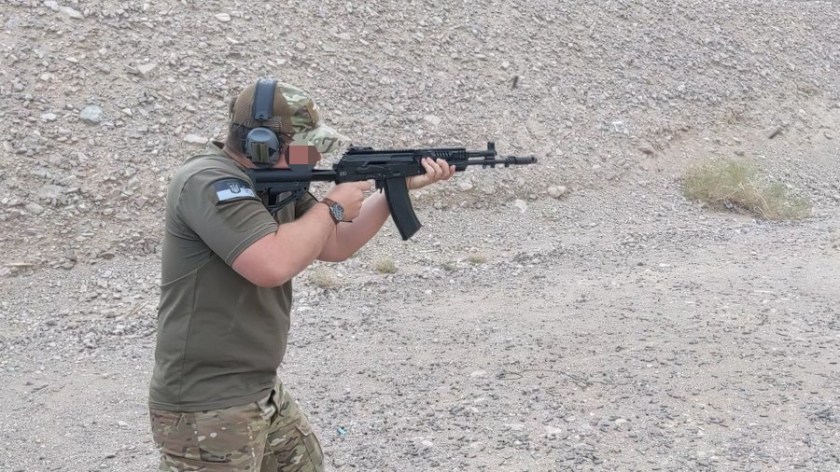
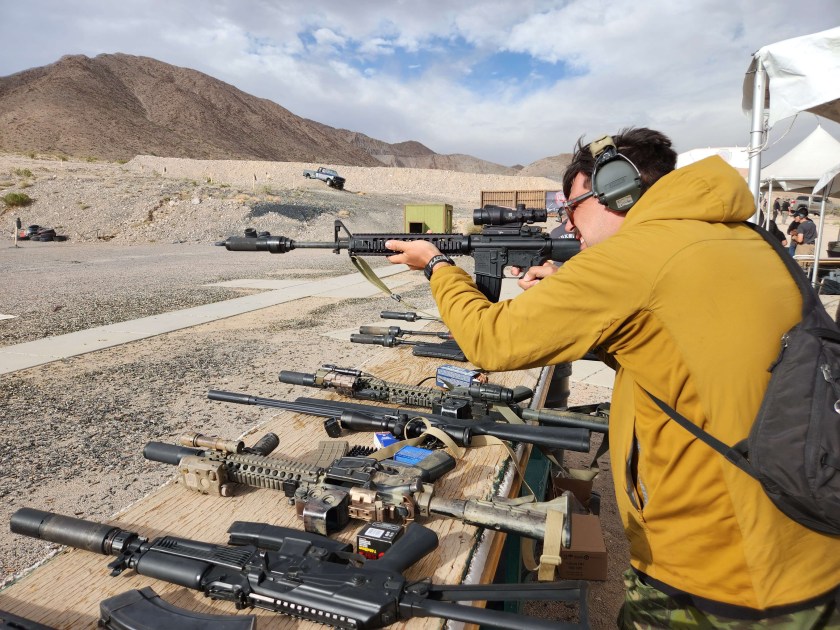
The other half of ROKC is essentially a celebration or small festival centered around the Kalashnikov rifle. There were several vendors present, such as Century Arms, IWI, HuxWrx, Dead Air, BlueForce Gear, and several others. M13 Industries had a host of select-fire gats to unload for a nominal fee, such as the M4, AKM, M1A1 Thompson, M3 Grease Gun, and AK-12. I personally shot the AK-12, which shot as nicely as any 5.45 does, with a bit of extra swag. We can get into it’s inherent flaws some other time, it was still super fun.
The suppressor manufacturers were offering demos on their products. The guys with HuxWrx and Dead Air were super friendly, and let us rattle off a few rounds with multiple suppressors and platforms. IWI let us shoot some full auto Galil ACEs in various calibers (I went with 5.45) and Century had a POF Mp5K with suppressor that we popped a few through.
Several booths were giving out little swag pieces commemorating the event. I also ended up buying a BlueForce Gear shirt with ROKC theme, and managed to badger the rep into giving me a handful of the famous BFG Lip Balm. I’m pretty sure I saw Beez Combat Systems giving away helmet scrims, but I didn’t manage to nab one. There were also a few food vendors, BBQ and Mexican food, to keep you going through the day.
Conclusion/Special Thanks
To wrap this up, Red Oktober was definitely an event that we enjoyed. No matter if you were a competitor or spectator (who had free admission to the event), there was always something to do.
If you are thinking of applying to shoot the competition side of this event, I would highly recommend it if possible. Admission to compete is steep compared to a local club match, but given the size of the event its not surprising. From what I noticed, what prevents a sizeable amount of interested competitors is the possibly intimidating match atmosphere. Between Duke and myself, we did not sense that at all during our time there. Instead, a majority of people we shot with had a welcoming attitude and the RSOs were clear in communication. Overall, it is a fun match to participate in at least once, and maybe the catalyst for some to compete on their free time afterwards.
Special thanks to Rifle Dynamics and Pro Gun Vegas for running such a large event, despite the factors that were within and out of their control. Both of us are most definitely looking forward to the next year.
Of course, this goes without saying, but special thanks to the Weapons Grade Waifus family for instigating this trip idea in the first place. Events like these may be fun, but are that much more memorable with a group of friends.
The WGW crew present at the event. It is believed that roughly 89.2% of all Spotify plays for “I Really Wanna Stay at Your House” occurred during ROKC weekend
“Soon” is the keyword: The “sooner” I see my target, the “sooner” my dot gets where I want the hits to be, the “sooner” I shoot, the “sooner” I get to the next position, the “sooner” I finish up this stage. One leads to another, and paired with an acceptance to push the envelope just a tick each time, all of a sudden I develop a weird sense of calm…and a weird sense of comfortably aggressive flow.
As a disclaimer, this blog post only serves to highlight noted observations I have as a novice level USPSA shooter. You, the reader, may be at a different skill level or different stage of your shooting journey. Thus, the lessons learned I will present should be taken with a grain of salt.
When I started shooting, my only exposure to competency was found through level 1 and 2 classes of instructors I found off of Instagram, and the local community I’ve had the pleasure of meeting through these instructors. One thing led to another and I found myself getting mixed up in an intro to competitive shooting class taught by Sean Burrows, a 3-gun shooter. After this class, I was able to get a feel for competitions in the outlaw matches hosted at a local range; however, I suffered a period of burnout where shooting was simply not as enjoyable as I once found it to be.
After some much needed self-assessment, I decided to bite the bullet and give USPSA (United States Practical Shooting Association) a try. My so-far 9 month journey has led me from being classified as a D-Class to a C-Class shooter. This progression is not necessarily amazing – maybe even slow, for some – but that is where I currently am. During that time frame, however, I have found a much better understanding of shooting competency and marksmanship I only dreamed of previously.
The decision to learn more about match mentality was mainly because these “self-fulfilling prophecies” have hampered my performance at some of the local club matches I have shot; not only can they potentially set back skill advancement, but may also accelerate burnout. Other local shooters, also new to competition, have expressed that they encountered these same roadblocks, so I feel there is cause for concern for these as things that would turn someone away from the sport or prevent them from trying altogether.
What is Match Mentality
The term “match mentality” is something I encountered browsing through Ben Stoeger’s collection of practical shooting books. Ben, a world-renowned IPSC shooter, explains match mentality through an analogy where he equates the mental game to a computer’s operating system (OS):
The mental game is the OS through which we apply everything we know and do in practical shooting. Everything is tied into and runs through this mental matrix, including our technical skills and abilities, our learning style and practice methodologies, our memories, our emotions, our decisions, our motor skills, and our judgments. You can’t stop it and you can’t “solve” it. Everything in life affects it. But you can manage it, and you can use it to your benefit.
-Ben Stoeger
For those that may have come from a sports background, this OS mentality concept may seem familiar. Practical shooting is a sport and the shooters that participate are varying levels of athlete depending on their investment in the sport. In the USPSA-specific sense, facets of match mentality include the mental aspects that Ben described above, and other factors like equipment and weather.
I will focus primarily on the emotional and judgment aspects of my mentality that I have experienced, and how they manifested themselves in a match. While I have not been in this game long enough, some of the sentiments I have stem from these aspects and have been observed to be reflected among some other newer shooters I have shot with.
Prophecies
I define these “prophecies” as thoughts, feelings, or comments that I’ve heard or said myself at one point in my USPSA journey, and have had a subtle influence on my overall performance as a shooter. This is not an encompassing list, but rather highlights of ones that stuck out the most or others have said as well. I will divide them into three categories: pre-stage (coming to a new stage/walkthrough/before a run), mid-stage (during the run), and post-stage (after the run/walking to the next stage).
Pre-Stage
“Wow, I hope I don’t get DQ’d (get disqualified) on this stage”
“Oh man, I hope I suck less on this stage”
“I’m just here to help tape targets and run the tablet”
Mid-Stage
“Gotta go fast because others are fast” or “Gotta go slow and get my hits”
“*slide locks back* Oh shit, I forgot to reload earlier”
“Messed up the plan, got nothing to lose now”
Post-Stage
“Well, that went worse than I thought it would”
“I totally bombed that partial/no shoot, damn I suck”
“Oh man, I hope I suck less on the next stage”
You can sense where it starts going downhill
Personal Cues
Over time, I identified some of these prophecies and how they connect to an underlying problem in regards to my confidence and my attitude in shooting a match. They bring unnecessary baggage to a stage and occupy precious mental bandwidth when it’s time to perform. The following cues have helped reduce the white noise and keep my head in the game:
Experience breeds confidence. New experiences take time to learn and understand. The more you shoot matches, the more you understand what your capability as a shooter is. That does not mean signing up and shooting literally every match on Practiscore, but participating in matches along with supplemental dryfire/live fire can help develop a deeper understanding of what you can/cannot do and what to work on. This feeds into a cycle that would help cultivate a healthy learning mindset and better deal with adversity.
Each stage is a fresh start. Not one stage in a match is ever the same. To me, this helps address the issue of carrying baggage into a stage. Let us say that a match is a whole pizza. Yes, each stage is a piece of the whole pie; subsequently, your match standing does depend on your performance on a cumulative score of all stages. However, it is extremely difficult to eat the whole pizza pie in one go. Rather, taking it piece by piece is the more logical and viable route. In comparison, treating each stage separately can help keep your focus in the present, not the past or future.
“It’s not the plane. It’s the pilot.” This is a quote that comes up regularly when you watch Top Gun: Maverick or see the promos for it. However, it is true to a certain degree. When I started out, I was worried about everyone else’s performances, no matter their skill level. I placed an exacerbated amount of pressure to prove myself because someone was a certain class and/or ran certain equipment. No matter the equipment, the class, the stage plan – it is all up to the shooter to make their hits.
“Comfortable aggression”
This seems like an oxymoron, but this phrase was something that came up when I was talking to Matt Chua, a local Carry Optics Grandmaster (GM), after I registered for my first Level II major match (which is in late September, write up to follow). I was throwing out some self-deprecating jokes and said something along the lines of “as long as I’m in the top 50%, I’ll be happy.” However, Matt brought it back to the ground quickly, stating that my goal should be “…to perform the best you can get, with hits as accurately as you can make them while being comfortably aggressive.”
At first I didn’t understand what he meant, and that last part sounded especially weird. Then the realization hit me when I was reviewing some of my match footage: because of a bad experience of “outrunning my headlights” in an Outlaw match, I was afraid of pushing the pace. Mentally, I had been equating a faster pace to crashing and burning. If I didn’t get a hit or miss a reload, I froze up; I found myself walking to positions to hit things on the move to minimize red dot movement. I was overthinking way too much because I was afraid of messing up and not getting my hits.
My interpretation, which reflects my current mindset, is that I want to hit these targets as soon as I can see them. “Soon” is the keyword: The “sooner” I see my target, the “sooner” my dot gets where I want the hits to be, the “sooner” I shoot, the “sooner” I get to the next position, the “sooner” I finish up this stage. One leads to another, and paired with an acceptance to push the envelope just a tick each time, all of a sudden I develop a weird sense of calm…and a weird sense of comfortably aggressive flow.
Not too shabby, but still much to fix
Load and make ready!
Hopefully, I have provided some value to anyone that is looking into the practical shooting scene or to those such as myself that may decide they want to invest a bit more into the sport. It must be reiterated that your mileage may vary. Match mentality weighs an individual’s qualities heavily, so it is up to yourself as a shooter to know yourself and your equipment. You will probably be at a higher skill level, utilize different equipment, or some combination in the future that will force your match mentality to grow with you. Welcome the growing pains, don’t try to fight them.
Of course there is a lot more that goes into the practical shooting sport aside from mindset. I hope to share more of my journey with you all and am eager to hear more about everyone’s experiences in this pretty fun sport. See you all out on the range.
Additional Resources
Here is a short list of podcasts, books, and other resources that have helped me in my USPSA journey so far. It’s not a complete list, but it’s a start:








 WGW Blog